
 Jan
17
Jan
17
Ventilation Zones in Sportswear – Is it Really Worth the Hype?
- 17 January 2026
- 0 Comment(s)
Some training tops look perfectly engineered, until movement, heat, and sweat expose a very different reality. Heat often builds rapidly across the back, moisture accumulates around the underarms, and fabric may cling or restrict movement within minutes. In many cases, performance remains unaffected, while comfort does not. This pattern of discomfort is more common than it is openly discussed, and it explains why ventilation zones in sportswear began gaining attention. The focus did not emerge from marketing trends alone, but from repeated feedback shared by athletes, coaches, and regular gym users who experienced similar pressure points. Over time, these consistent concerns influenced design decisions.
As a result, the interest in ventilation zones is not without basis. While the concept is sometimes overstated, its origin lies in practical observation rather than surface-level hype.
What are Ventilation Zones in Sportswear?
Ventilation zones in sportswear are deliberately placed areas that allow heat and moisture to escape more easily. Instead of treating the body as one flat surface, ventilated sportswear works with how the body actually behaves during movement.
This approach supports breathable sportswear design without making the entire garment thin or fragile. Along with that, it acknowledges something very basic: we sweat unevenly, always have. Shoulders behave differently from backs, and legs behave differently from torsos.
When ventilation is done well, you rarely notice it right away. You just feel less uncomfortable as time passes, and that’s usually the best sign.
Key Placement Zones for Ventilation
Underarms
Underarms are one of the first areas to heat up. Movement, friction, and limited airflow all collide here. Ventilation zones in this area help moisture escape earlier, which reduces that heavy, clingy feeling mid-session. Moreover, it often makes repetitive movements feel less restrictive over time.
Upper and Lower Back
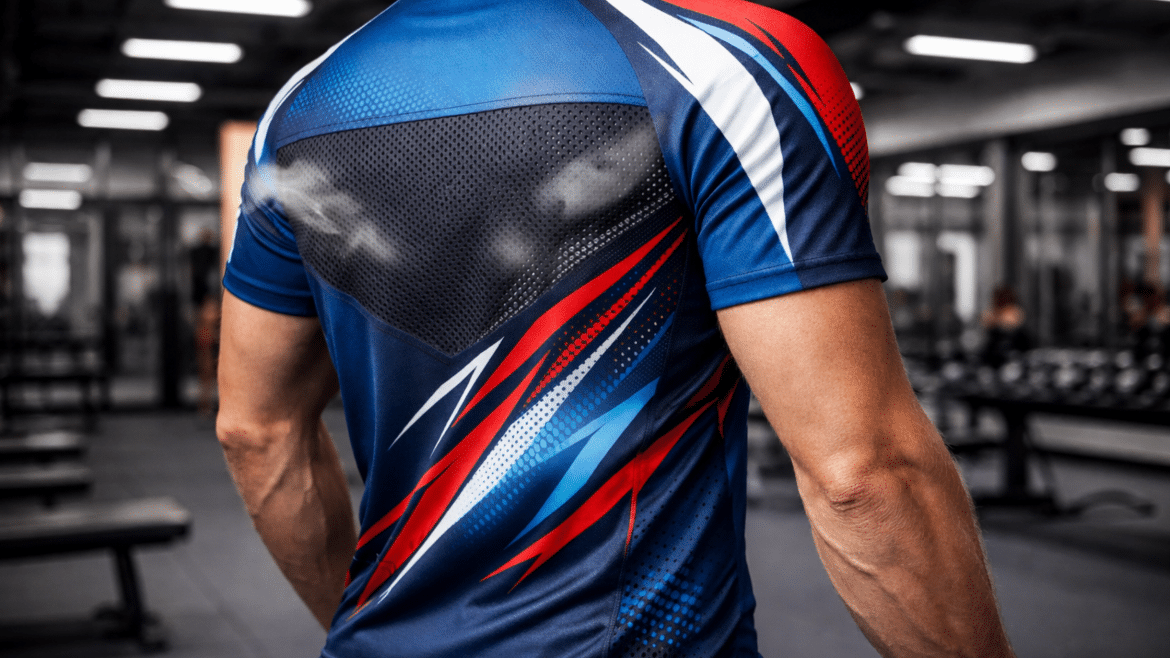
The back is a quiet heat trap, and posture alone can block airflow, especially during running or strength training. Ventilation placed along the upper or lower back allows heat to release gradually instead of building up all at once. It’s not dramatic, but during longer sessions, the difference becomes noticeable.
Sides of the Torso
The sides of the torso naturally catch airflow when the arms move. Ventilation here improves airflow in sportswear performance without interfering with structure across the chest or core. Besides this, side panels often make garments feel more flexible during twisting or lateral movement.
Behind the Knees and Inner Thighs
Lower-body ventilation rarely gets the spotlight, but it should. Friction occurs constantly behind the knees and along the inner thighs whenever one is running or cycling. Humidity accumulates too easily; areas of ventilation in this area assist in controlling the accumulation and subsequently reducing irritation.
Materials & Techniques Used for Ventilation Zones in Sportswear
Mesh Panels
The most common one is mesh. It has open knitted fabric, which enables air to pass freely through the garment and also evaporation of sweat. Mesh supportive to sportswear can be effective in terms of ventilation without compromising the garment. It will be shaky or distracting when it is overused.
Laser-Cut Fabric
Laser-cut ventilation uses small, precisely placed openings in solid fabric. These allow airflow while maintaining shape and durability. Beyond this, laser-cut zones tend to feel smoother against the skin, which matters during long or repetitive movement.
Moisture-Wicking Finishes
Moisture-wicking finishes pull sweat away from the skin and spread it across the fabric surface. This speeds up evaporation, even in areas that still need structure and support.
Smart Textiles
Smart textiles are still developing, but they are changing how sportswear ventilation is approached. Certain types of fabrics react to heat to change into a more permeable type, and others react to the level of moisture. These materials are not mainstream yet, but they hint at where ventilated sportswear may be heading.
The Bottom Line
Ventilation zones in sportswear are not a gimmick, but they are not a miracle either. When placed with intention and supported by the right materials, they help manage heat, improve airflow, and maintain comfort as activity continues. When added without purpose, they remain mostly visual. Good ventilated sportswear respects how the body actually moves and heats up. It doesn’t shout about performance, it quietly supports it.
Brands that understand this tend to focus on function rather than exaggeration. TD Sportswear follows this practical approach in its custom sportswear by aligning ventilation placement with fabric behavior and real athletic use. When airflow works in the background instead of competing for attention, the garment feels natural, and that’s usually when design gets it right.