
 Feb
10
Feb
10
Restricted Sportswear in Competition: Why Certain Activewear are Restricted in Tournaments?
- 10 February 2026
- 0 Comment(s)
In high-level competition, the type of clothing athletes wear is often as important as their performance, to the extent that restricted sportswear rules exist to maintain equity. The sports authorities, such as World Athletics, have stringent guidelines on apparel to prevent the use of technology to compensate for talent, as equipment and clothing-related challenges are among the leading reasons for competition disputes in athletics. Limited sportswear is not only a matter of style; in swimming, the high-tech polyurethane so-called tech suits once helped athletes cut seconds off their times and led to startling world-record increases of 2 percent or more.
Key Takeaways from the Article
- Numerous types of restricted athletic wear bring about unfair competition in sports events.
- Competition sportswear policies ensure fairness and athletes’ safety.
- Certain sports wear that is illegal influences performance balance and ethics.
List of Restricted Sportswear in Competition
Super Swimming Suits
Previously, super suits were used to help swimmers set records because they reduced drag and increased buoyancy. However, they created massive disparities in player performance. Thus, FINA prohibited these high-tech suits as limited sportswear. In addition, they have provided explicit benefits associated with technology rather than expertise. Numerous events were unfairly boosted, which sparked global concern. Textile-only suits are still permitted today. This discourages the use of illegal sportswear in sports events and ensures that competition is fair to all.
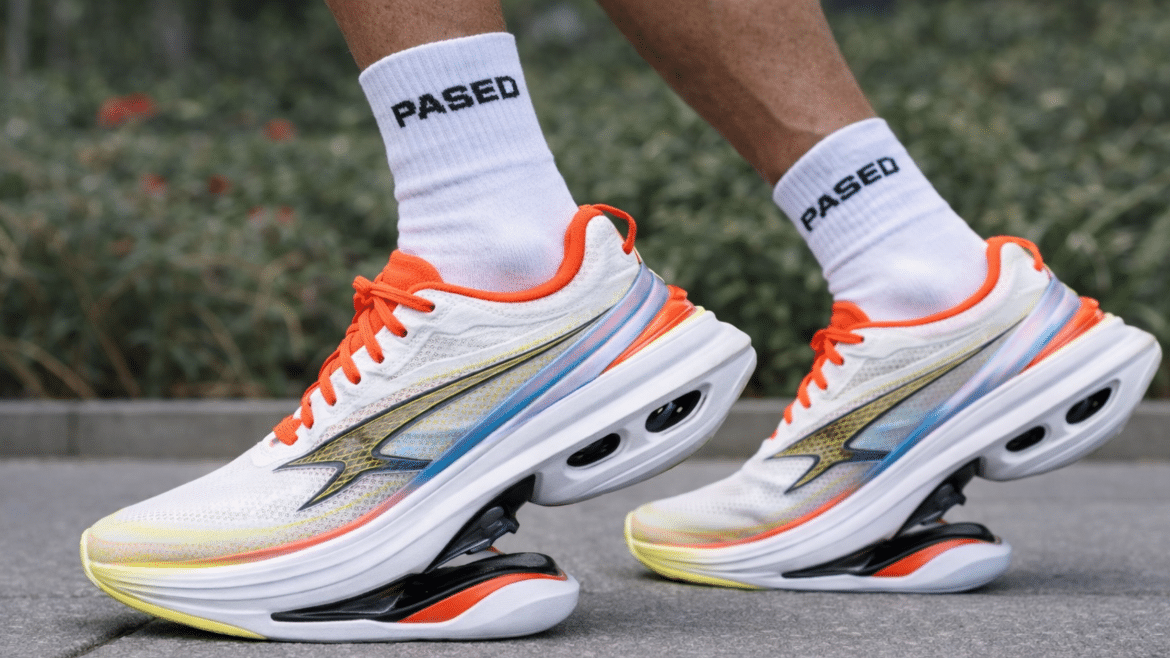
Running Shoes with a Sole Thicker than 40mm
Race results changed with the invention of running shoes that had extremely thick soles. Due to their energy-return and bouncing capabilities, they were designated as restricted sportswear by World Athletics. In addition, thick soles offered mechanical benefits unavailable to all athletes. Thus, the competition sportswear rules have changed such that sole thickness is restricted to 40mm. Advanced designs also exist; however, they must adhere to these standards. This regulation creates equal performance conditions and avoids unfair boosts.
Wimbledon White Policy
Wimbledon has a stringent all-white dress code to preserve tradition and consistency. Even though the rule is not performance-related, it is still subject to restricted sportswear regulations. Players are not allowed to wear bright colors and huge patterns. Besides, even minor trims are scrutinized by the authorities. This regulation maintains the event’s traditional character. Even though it is out of the ordinary, it is appreciated worldwide. It also points out the differences in competition sports apparel regulations in different sporting societies.
Jerseys with Personal, Religious and Political Slogans
Athletes are not allowed to wear jerseys that have powerful personal, religious, or political inscriptions. This rule, hence, avoids distraction and partisanship. These jerseys are considered limited sportswear because they affect the event’s environment. Additionally, slogans may cause conflict or tension among the participants. They are usually categorized by organizations as taboo during competition, particularly in international tournaments. This will provide fairness and respect to the sports environment by giving equal attention to performance rather than outside messages.
General Restrictions Beyond Clothing
Sharp Accessories
Acute accessories can be dangerous during serious exercises. Thus, products such as metal jewelry or sharp accessories are still included on the lists of prohibited sportswear. In addition, they may harm the athlete or the other competitors. Sports organizations impose these standards to improve safety. Even though some players like wearing accessories, competition laws focus on protection. For this reason, many incidents involve categorizing such things as unlawful sportswear in any sport, particularly in contact or high-speed sports.
Performance-Enhancing Substances
Performance-enhancing substances are not clothes, but they are connected with the idea of restricted sportswear. Athletes incorporate them to increase power, velocity, or endurance. Nevertheless, they pose unfair competition; hence, regulators categorize them as prohibited sportswear in competition issues. Furthermore, the use of drugs is discouraged by agencies that can be tested periodically. These regulations make sure that results are determined by natural performance. Even though there are shortcutting athletes, powerful rules safeguard the nature of sport.
General Equipment
Some equipment is restricted when it provides unequal assistance. Thus, authorities can prohibit the use of advanced technology devices or electronic devices that dictate speed or plan. The products can be categorized as revised limited sportswear analyses. Additionally, smart devices provide real-time information that alters the natural flow of competition. Even though they are helpful for training, these tools undermine fairness during official matches. To prevent unintentional breach of equipment rules and have a pleasant event, athletes should read the equipment rules before the event.
The Bottom Line
Athletes work a lot, but equality is based on equal terms. Thus, it can be concluded that it is necessary to learn the restricted sportswear regulations before joining any competition. Further, competition sportswear regulations are crafted by authorities to safeguard safety, integrity, and parity of performance. Due to ever-increasing innovation, specific gears are proving illegal in sporting activities whenever they give unfair advantages.
Restrictions can be complex, but they make skill the primary factor in winning. Numerous sportswear bans in competition cases are a reminder to athletes that technology cannot substitute talent. Finally, observing these regulations makes competitions fair, equal, and athletics-oriented.
TD Sportswear is one of the most appropriate brands regarding quality, regulation-friendly equipment, and high-performance sportswear. Select TD Sportswear to remain competitive, compliant, and confident in the field.